La Crónica
The Parish of San José in San José de Gracia
The town's parish church carries its patron's name and, in its stone and its registers, more than two centuries of layered history: a chaplaincy, a building raised piece by piece, and a change of diocese in 1972.
A church built for its patron
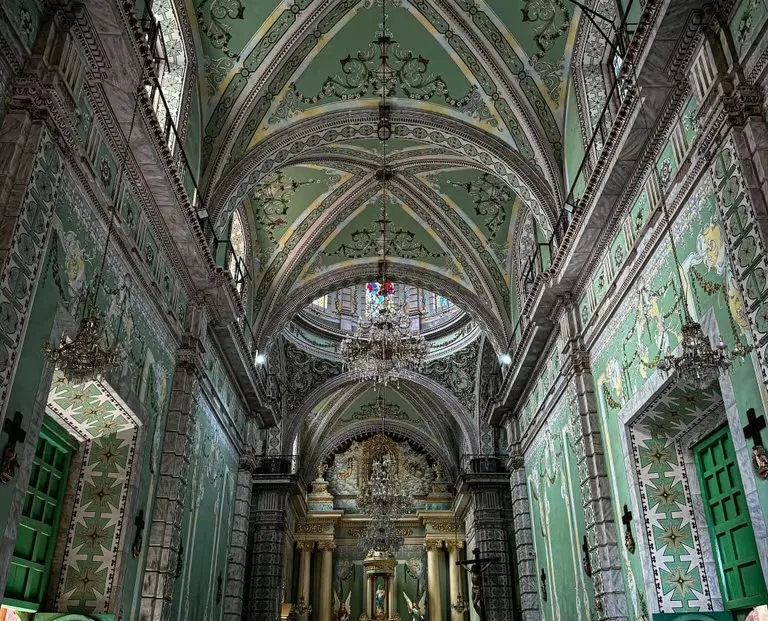
San José de Gracia takes its name, and its patron, from Saint Joseph. An earlier chaplaincy, a capellanía, is documented at San José de Gracia in the Tepatitlán archive, including an 1833 census of chaplaincies, and it is this earlier religious foundation that gave its name to La Capellanía, the hacienda land later tied to the town's economy and to its one surviving Cristero-era account. The parish church that stands today is built of local red cantera and riolita stone.
Watch live. The parish streams some Masses and processions live on its Facebook page. Follow it to catch the next broadcast →
Laying the first stone
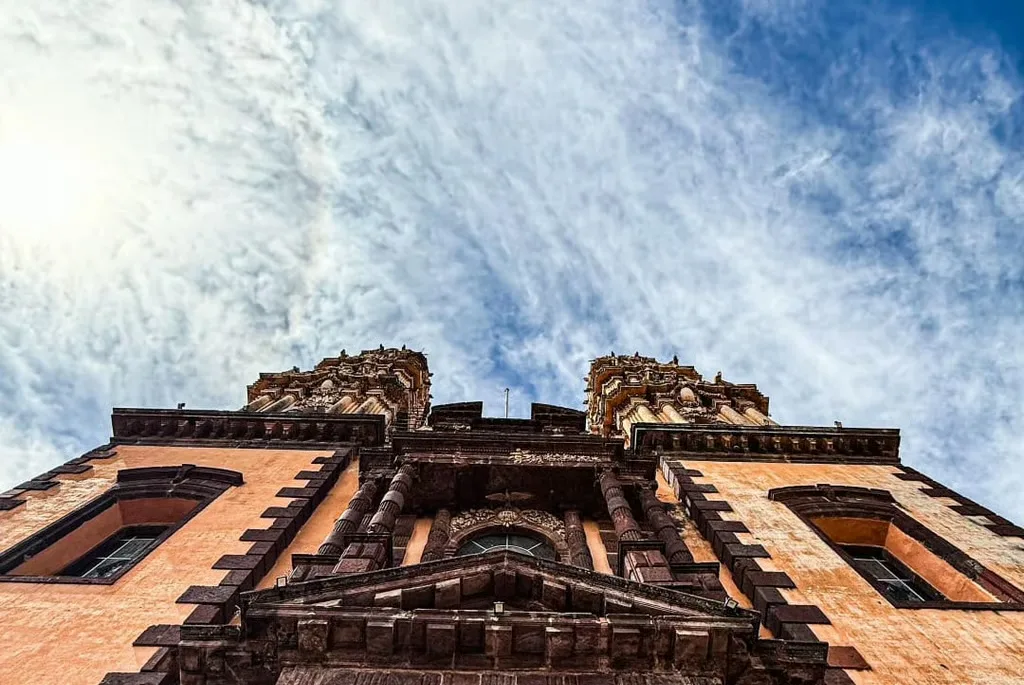
Two datings of the church's early construction circulate locally. One tradition places the start of the temple's construction in 1889. The town's own chronicle, Rincón Alteño, gives a more specific account: the first stone was laid on 19 March 1888, in a ceremony led by Cura Anastacio Limón, and the priest Hipólito Carmona began the building with a starting fund of eighteen centavos. The two dates rest on different local sources rather than on one confirmed record, and both are kept here until the parish's own books settle the question.
Becoming a parish
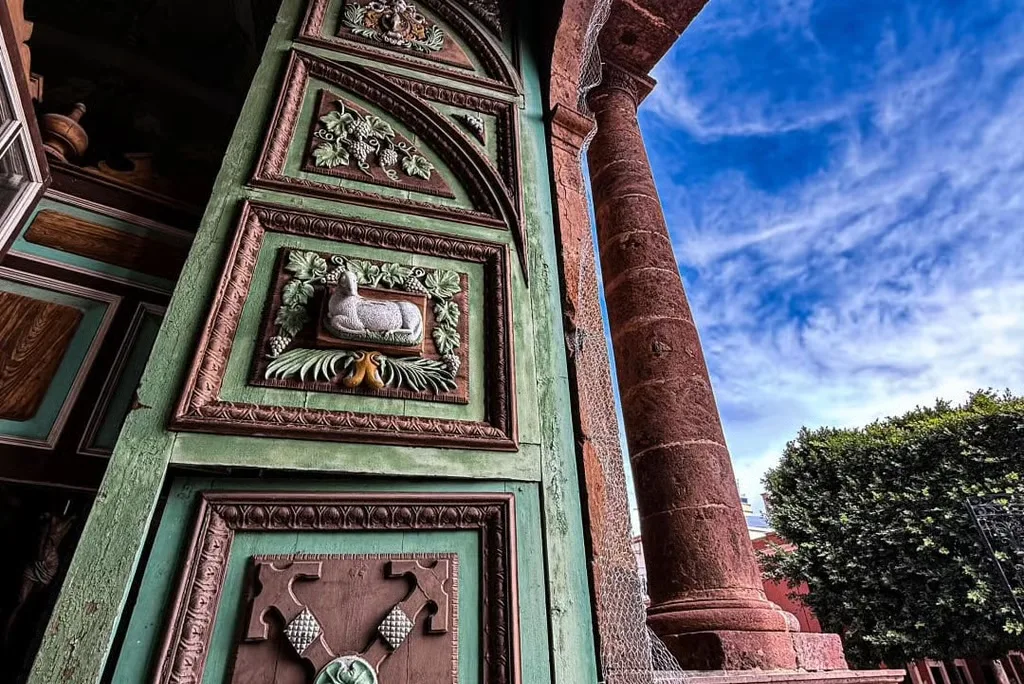
San José de Gracia was erected as a parish in its own right on 10 May 1910, by decree of Bishop José de Jesús Ortiz, according to Rincón Alteño; other local sources give 15 May of the same year. Its first parish priest was Fermín Padilla. The finished temple was consecrated on 15 May 1914 by Bishop Ignacio Placencia y Moreira, with later architectural work credited to Porfirio Villalpando. Before 1910, the town's baptisms, marriages and burials were recorded not here but at Tepatitlán's own parish, San Francisco de Asís, the matriz parish for the whole district.
A roster of priests
Rincón Alteño preserves what amounts to a full roster of the men who have served the parish, starting with Camilo Castellanos, recorded here from 1867, more than three decades before the church had parish status of its own. Darío Gutiérrez held the post through the Cristero years of the late 1920s, when Rincón Alteño records him hiding from the persecution. Juan Hernández, a priest from Arandas, served from 1944 to 1967, and the roster continues into more recent decades. The town's longtime chronicler, Taurino Arámbula Vázquez, spent more than thirty-four years at the church himself, as acolyte, bell-ringer and painter of its festival decorations, entrusted at times with donations sent home by parishioners working in the United States.
From Guadalajara to San Juan de los Lagos
For most of its history the parish belonged to the Arquidiócesis de Guadalajara. That changed in 1972, when the Diócesis de San Juan de los Lagos was created out of a group of parishes split off from Guadalajara, San José de Gracia among them. The parish now falls under that diocese's Decanato 10, alongside the parish of Capilla de Guadalupe.
The parish in the town's civic memory
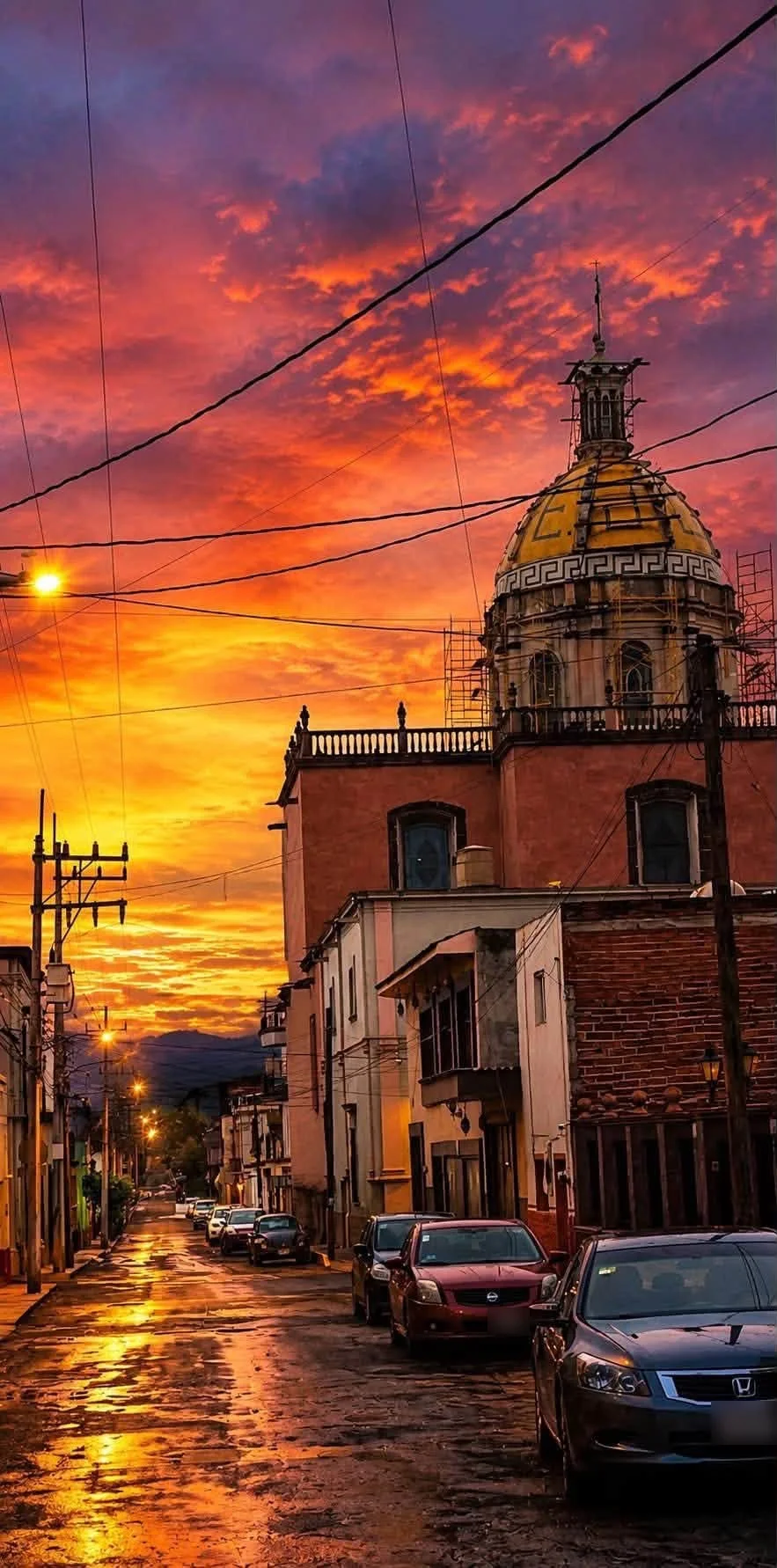
The parish's place in town life goes beyond the building itself. When San José de Gracia unveiled its own coat of arms in 2021, one of its quarters carries an image of the temple of San José, alongside an ox and plow on red earth, pairing the town's faith with its farming heritage. The town remains overwhelmingly Catholic today, about 96.7 percent of its population as of the 2020 census, and its fiestas patronales still fill the streets around the church every May.
A parish school, 1946
In 1946 the parish priest Juan Hernández set out to open a colegio parroquial staffed by the Franciscan sisters of Nuestra Señora del Refugio. On a sunny midday that August the whole town walked out to meet the founding sisters near the capellanía, with music, rockets and the bells ringing. The first superior was Madre María de Cristo. [per Rincón Alteño, p. 67]
The school had no fixed home at first and moved from house to house. Writing about 25 years later, the chronicler counted generations of its students who were by then parents themselves, and noted that the sisters were still teaching. Later in the book he lists a reconditioning of the colegio parroquial among the works of parish priest Albino García. [per Rincón Alteño, pp. 68, 71]
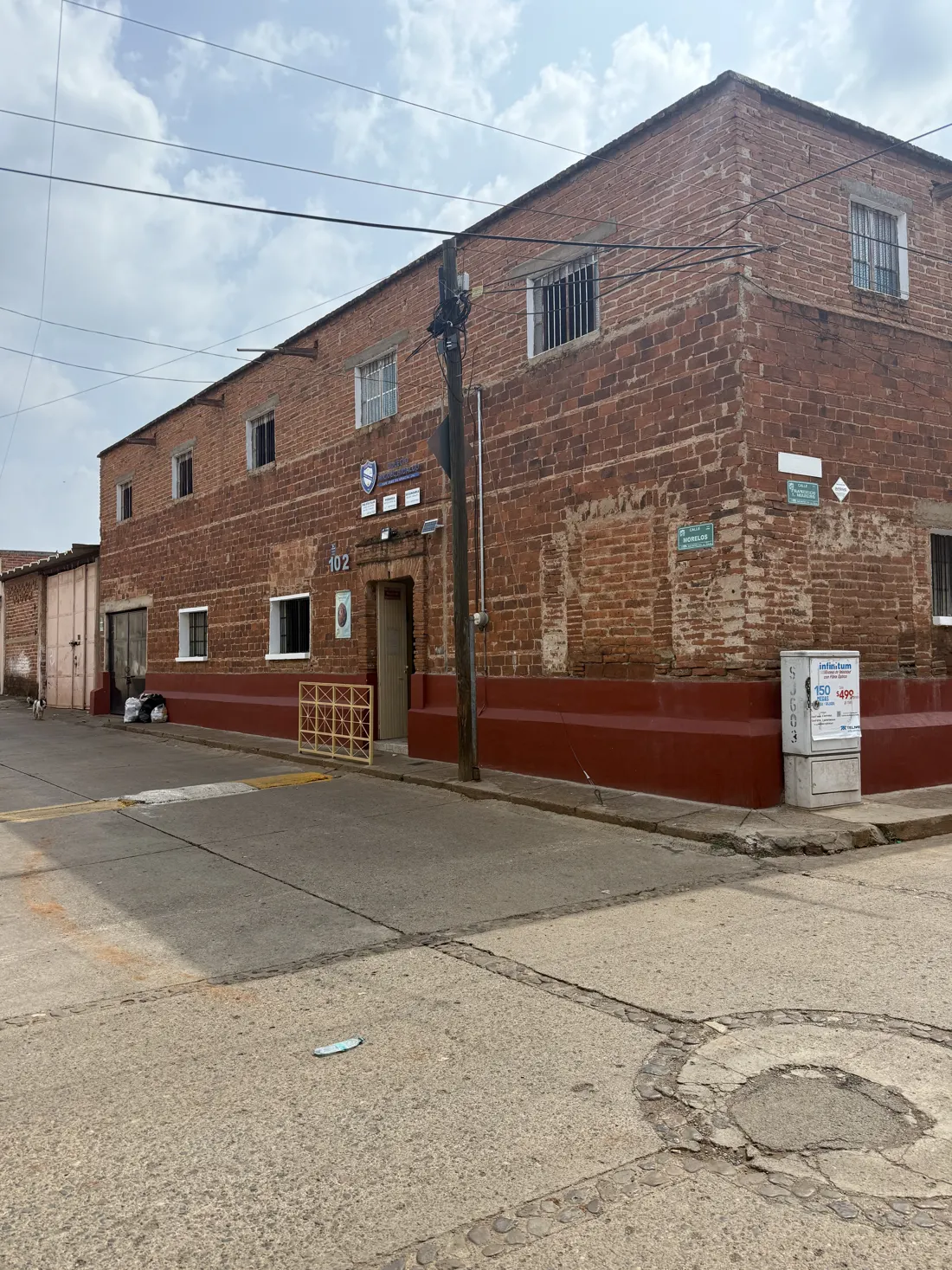
A Catholic school still teaches in town today: the Colegio Miguel Hidalgo, at Morelos 102 on the corner of Francisco I. Madero, with preschool, primary and secundaria. We are still confirming whether it descends directly from the 1946 colegio parroquial. If you studied there and know its story, write to us.
What the parish books would still settle
The dates that anchor this history, 1888 against 1889, 10 May against 15 May 1910, rest on local sources rather than on a primary parish register examined directly, and neither the name of the parish's current priest nor its present Mass schedule turned up in any source consulted for this article. A look through the parish's own books, rather than the secondary accounts that quote them, would settle both.
In town today
- Parroquia de San José de Gracia The church today, with Mass times and live-streamed Masses.
Sources
- Rincón Alteño (Arámbula Vázquez, 1974/1996): roster of curas and construction/erection dates [local tradition]
- Archivo Histórico Municipal de Tepatitlán: 1833 censo de capellanías [primary]
- Diócesis de San Juan de los Lagos [primary]
- Dónde Hay Misa: Parroquia San José de Gracia (Decanato 10) [secondary]
- IIEG Jalisco: Análisis sociodemográfico de San José de Gracia (2020) [primary]
- Ayuntamiento de Tepatitlán: Escudo de Armas de San José de Gracia (2021) [primary]