La Crónica
How the temple of San José was built
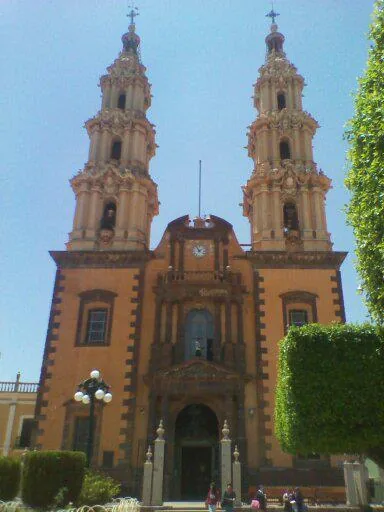
The parish church on the plaza took more than thirty years to finish. It started with eighteen centavos and a first stone in 1888, was consecrated in 1914, and got its two towers in the 1920s. Most of what we know comes from two old documents the town's chronicler copied into Rincón Alteño: a 1914 pamphlet and a 1931 church bulletin.
A first stone in 1888, and eighteen centavos
The old chapel was no longer big enough. In 1887 people began to organize for a proper church. The first stone was laid on 19 March 1888, in a ceremony led by Cura Anastacio Limón, to the joy of the town. [per Rincón Alteño, p. 34]
San José de Gracia was then a vicariate of the parish of Tepatitlán, and its vicar, Father Hipólito A. Carmona, began the work. [per Rincón Alteño, pp. 41, 43] A 1931 church bulletin copied into the book says the starting fund was eighteen centavos. [per Rincón Alteño, p. 41] For the parish's institutional history and its priests, see The Parish of San José.
The priests and master builders
The church went up in stages. The 1931 bulletin names four of them: Carmona laid the foundations and most of the walls, Marcelo R. Aguilar finished the walls and the vaults, Fermín Padilla decorated the church and laid the floor, and Amado López had the two towers built. [per Rincón Alteño, p. 41]
The 1914 pamphlet, written before López arrived, lists five vicars who worked on the temple: Hipólito A. Carmona, Marcelo R. Aguilar, Perfecto Flores, Cayetano Gómez and Fermín Padilla. It credits Padilla with the dome, the altars and the finishing work. [per Rincón Alteño, p. 43]
The same pamphlet credits master builder Santos Ramírez, who directed the work until the vaults were closed, master builder Sabino Pozos, who directed the dome and altars, and the decorator José M. Vázquez. [per Rincón Alteño, p. 51] The 1931 bulletin names the architect of the towers, Porfirio Villalpando of Guadalajara. [per Rincón Alteño, p. 42]
Stone on foot, brick hand to hand
The town built it with its own hands. Men and women went on foot to Los Guayabitos, El Cerrito and El Cerro to bring the material the work needed. Adobe and brick came from El Colorín and were passed from hand to hand up to the height of the walls. In 1974 many of those witnesses were still alive, and they remembered the work as happy days despite the sweat. [per Rincón Alteño, p. 40] The development plan names local red cantera (rhyolite) and tepetate as its stone. [per Plan de Desarrollo de San José de Gracia, PDF p. 28]
A Latin cross with a 35-meter dome
The church measures about 40 by 9 meters, laid out as a Latin cross, with a dome about 35 meters high at the crossing. The dome and walls are brick and mortar. The main façade and its projecting details are cut cantera. [per Rincón Alteño, pp. 41, 44]
Walking over the vaults, the chronicler found an inscription at the base of the dome: it was begun on 2 April 1907 and finished in September 1907 (the day is blank in the text). Another says it was done by order of Father Fermín Padilla. [per Rincón Alteño, p. 52]
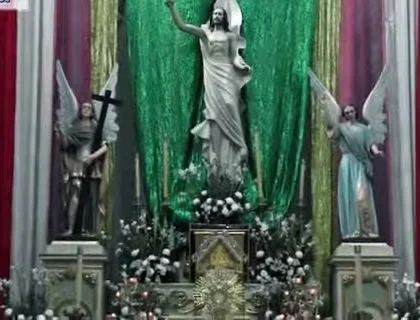
The main altar was designed by engineer Nicolás Leaño. It is carved cantera, with pedestals for the archangels Michael and Gabriel and a statue of Saint Joseph above the apse. The altar table, the consecrated part, is Carrara marble. [per Rincón Alteño, p. 44]

The consecration of 15 May 1914
Bishop Ignacio Placencia y Moreira of Tehuantepec, a former parish priest of the district, consecrated the church on 15 May 1914. The chronicler copied the account from an eyewitness pamphlet lent to him by Porfirio Hernández Valle. [per Rincón Alteño, pp. 41, 42 to 52]
The bishop arrived by train at the Atotonilco station on the night of 11 May. On the 13th he rode the five leagues to San José. He entered town with more than 200 horsemen, four abreast, behind children waving flags and with the town band playing. During his stay he confirmed more than a thousand children. [per Rincón Alteño, pp. 45, 46]
On the night of the 14th the relics of the martyrs Vitus, Victorinus and Aurelia were sealed in a silver box for the main altar. The ceremony began at 4 a.m. on the 15th and was followed by the Mass of consecration. [per Rincón Alteño, pp. 47, 49] That afternoon a parade of floats with biblical scenes filled the streets, paid for by the townspeople. [per Rincón Alteño, pp. 49, 50] On its last evening it ran past dusk, and nearly a thousand people carried lit candles. [per Rincón Alteño, p. 51] The pamphlet describes a town of "little more than three thousand souls". [per Rincón Alteño, p. 44]
The towers, the organ and the bells
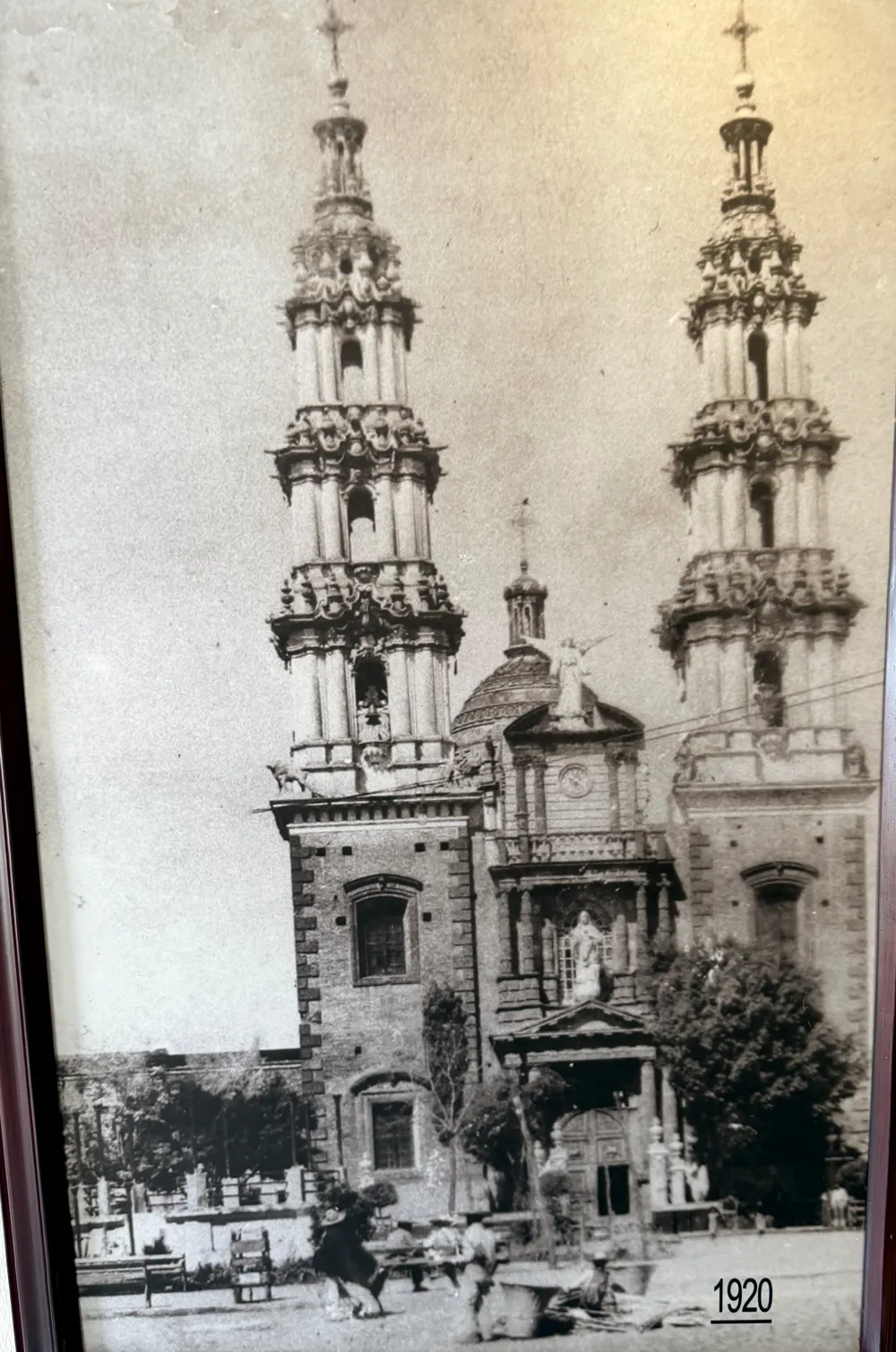
In 1914 only the bases of the towers stood. [per Rincón Alteño, p. 45] Amado López arrived as second parish priest in June 1920 and built the towers and the chapel of Saint Anthony. [per Rincón Alteño, p. 59] The development plan dates the towers' completion to 12 October 1921. [per Plan de Desarrollo de San José de Gracia, PDF p. 64] The 1931 bulletin says almost a single resident paid for both towers, and that the parish raised $10,500 in six months for a German organ. [per Rincón Alteño, p. 42]
The chronicler climbed the towers and copied the bells' inscriptions. Among them: [per Rincón Alteño, pp. 52, 53]
- The founding bell, Santa María Guadalupe, dated 19 September 1892 and signed Antonio Muñoz, 80 arrobas.
- The consecrated bell: cast in March 1912 under Father Padilla, consecrated by Placencia on 19 May 1914.
- Two 1940 bells by Antonio Sandoval, one of them known as La Lupita, rung only on solemn days.
What was lost and what changed
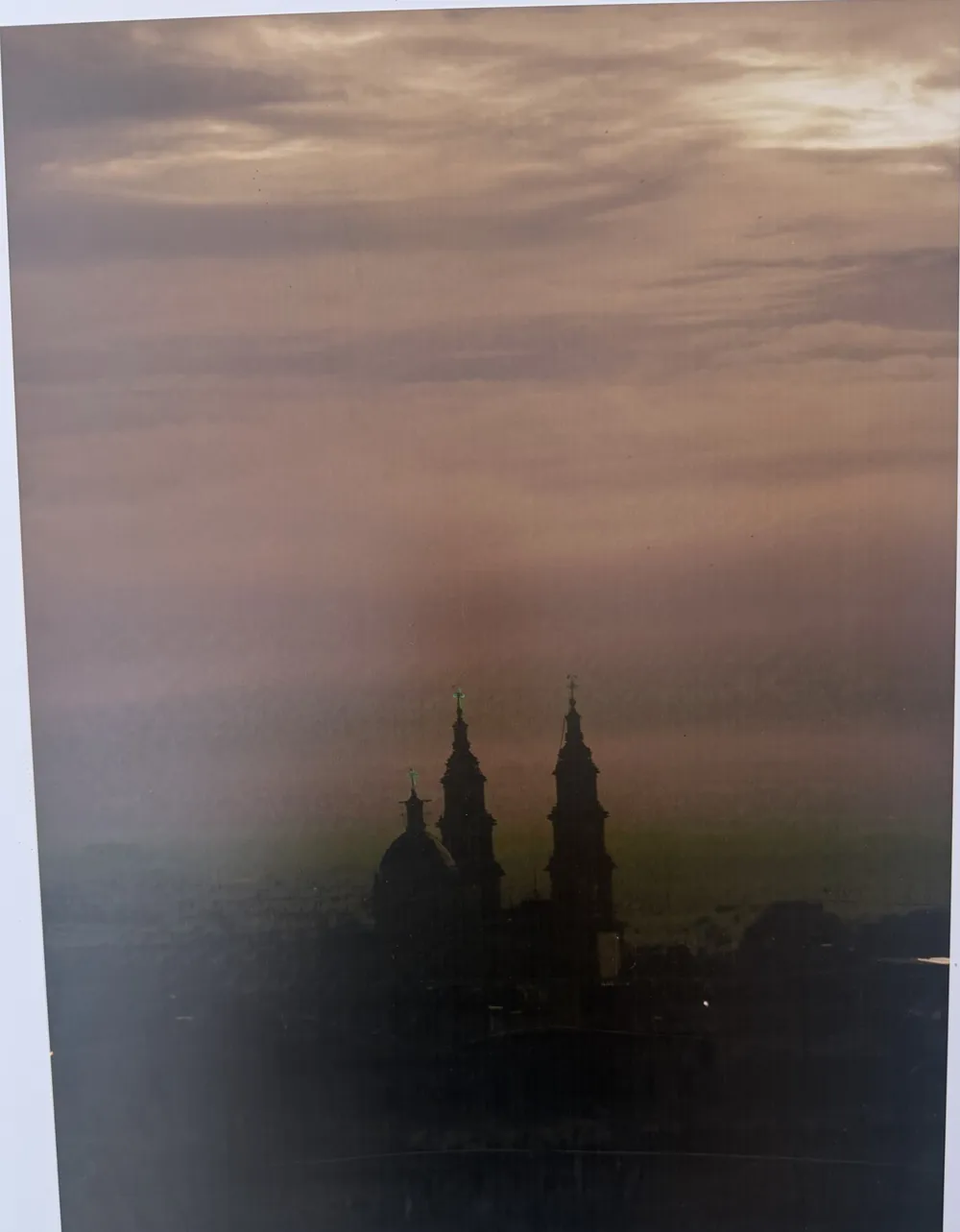
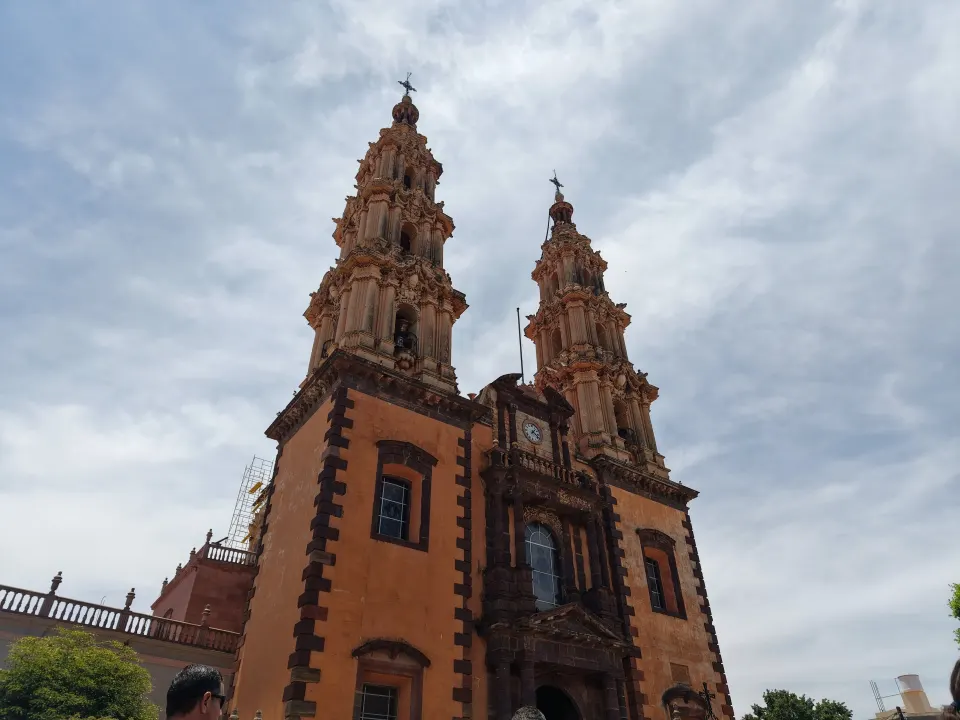
During the Calles persecution some of the church's statues were destroyed or damaged. [per Rincón Alteño, p. 42] The original archangels of the main altar were hidden in the Cristiada so they would not be burned, and were never recovered. In 1963 Don Panchito, a sculptor from Arandas, made copies that never matched, and they now stand in the chapel at Las Hormigas. [per Rincón Alteño, p. 55]
Cardinal Garibi ordered masonry neon fixtures and swans removed as poor taste. In 1971 a crumbling angel and a masonry Sacred Heart came down, the second to make room for a stained-glass window of Saint Joseph. [per Rincón Alteño, p. 54] The window went in at the level of the choir, facing the plaza, in 1972, a gift from a married couple. [per Rincón Alteño, p. 79]
Garibi liked to admire the German organ, and the chronicler remembered his advice: "take care of your beautiful church, they don't make these anymore". [per Rincón Alteño, p. 74]
Where the dates disagree
Rincón Alteño gives 19 March 1888 for the first stone. [per Rincón Alteño, pp. 34, 43] The development plan gives 19 March 1889. [per Plan de Desarrollo de San José de Gracia, PDF p. 29] The book also names two different priests for that day: the chronicler credits the ceremony to Cura Anastacio Limón, while the 1914 pamphlet names Dr. Pedro Romero as parish priest of Tepatitlán when the work began. [per Rincón Alteño, pp. 34, 43]
On the parish's erection, the 1931 bulletin gives a decree of 10 May 1910; the pamphlet, erection on 15 May by a decree of 9 March; and the book's copy of the decree, 11 March 1910. The chronicler gives 15 May 1910. [per Rincón Alteño, pp. 41, 43, 57] The development plan also gives 15 May. [per Plan de Desarrollo de San José de Gracia, PDF p. 29] The parish's own books would settle these questions.
Sources
- Taurino Arámbula Vázquez, Rincón Alteño (1974; text corrected June 1993): the 1887 to 1888 start (p. 34), townspeople's labor (p. 40), the 1931 Boletín Eclesiástico (pp. 41 to 42), the 1914 consecration pamphlet (pp. 42 to 52), dome inscription and bells (pp. 52 to 53), the 1910 erection decree and dates (p. 57), later changes (pp. 54, 55, 59, 74, 79) [local tradition]
- Gobierno Municipal de Tepatitlán, IMPLAN: Plan de Desarrollo de la Delegación de San José de Gracia 2018 to 2033 (2021): building stone (PDF p. 28), 1889 start date and 15 May 1910 erection (PDF p. 29), towers finished 12 October 1921 (PDF p. 64) [secondary]
- Framed photograph of the parish church marked 1920, on display at the Delegación de San José de Gracia (photographed 2026) [primary]